

Impacted Canine Exposure in Billerica, Westford & Worcester, MA
The upper canine teeth (also known as cuspids or eyeteeth) play a critical role in proper bite alignment, dental function, and smile aesthetics. When these teeth fail to erupt naturally, they are considered impacted and may require a surgical procedure called canine exposure to guide them into place.
At New England Oral & Maxillofacial Surgery, our board-certified surgeons perform impacted canine exposure in collaboration with your orthodontist to help ensure successful eruption and alignment. With offices in Billerica, Westford, and Worcester, MA, we treat both teens and adults using advanced surgical techniques and coordinated orthodontic care.
What Is an Impacted Canine?
Canines are the last of the front teeth to develop and erupt — usually between ages 11 and 13. Due to crowding, genetics, or abnormal path of eruption, they may become impacted in the gum or jawbone and fail to emerge on their own.
An impacted canine may be:
- Palatally impacted (toward the roof of the mouth)
- Labially impacted (toward the lip side of the arch)
- Horizontally positioned
- Trapped due to insufficient space or abnormal growth
Leaving an impacted canine untreated can lead to misalignment, resorption of nearby teeth, cyst formation, or damage to the dental arch.
To learn more about the structural factors behind impacted teeth, visit our Jaw Surgery page.
What Is Surgical Canine Exposure?
Surgical exposure of an impacted canine involves uncovering the tooth beneath the gums and sometimes attaching an orthodontic bracket or chain to help guide it into position. This procedure is performed in conjunction with your orthodontic treatment plan and plays a vital role in creating a functional, well-aligned smile.
There are two primary techniques:
- Open Exposure
The gum tissue over the impacted tooth is removed, allowing the tooth to erupt naturally. - Closed Exposure
A small bracket with a gold chain is attached to the impacted tooth. The gum is repositioned, and your orthodontist gradually pulls the tooth into place using gentle force over time.
The choice depends on the tooth’s position, your age, and your orthodontist’s treatment plan.
Who Needs This Procedure?
Impacted canine exposure is most often recommended for:
- Teens or adolescents undergoing orthodontic treatment
- Patients with a confirmed impacted canine on X-rays
- Individuals with retained baby canines or asymmetric smile appearance
- Patients at risk of root damage or tooth crowding from an un-erupted canine
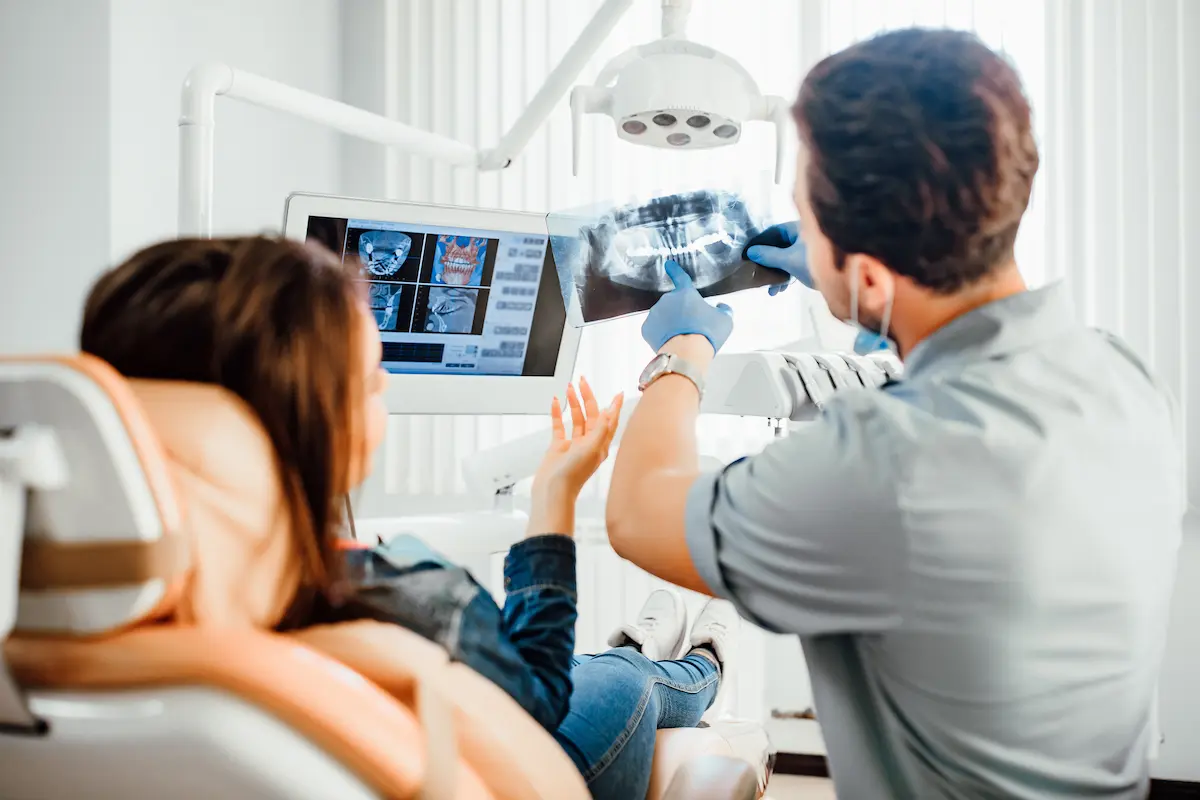
Early diagnosis and intervention improve outcomes significantly. We use 3D Imaging and panoramic X-rays to accurately determine the position and angle of the impacted tooth.
What to Expect During Surgery
The procedure is typically performed in-office under local anesthesia, with IV sedation or general anesthesia available for anxious patients or complex cases.
Steps may include:
- A small incision in the gum tissue to expose the impacted canine
- Optional bonding of a bracket and chain to the tooth
- Suturing of the area if performing a closed exposure
- Coordination with your orthodontist to begin traction
Patients are usually able to return to school or work within a day or two, with mild discomfort managed by over-the-counter or prescribed medications.
Visit our After Impacted Tooth Exposure page for post-operative instructions and recovery guidelines.
Pediatric and Teen Patients Welcome
We work closely with orthodontists and pediatric dentists to ensure the best outcomes for younger patients. Our team is experienced in managing teen anxiety and follows specialized protocols outlined on our Pediatric Patients page.
Serving Communities Across Massachusetts
Our oral surgeons offer impacted canine exposure procedures at our offices in Billerica, Westford, and Worcester. We frequently treat patients from Lowell, Bedford, Andover, Burlington, Wilmington, and Concord.
To schedule your consultation or refer a patient, visit our Contact Us / Locations page.
Frequently Asked Questions
Lorem ipsum dolor sit amet, consectetur adipiscing elit. Suspendisse varius enim in eros elementum tristique. Duis cursus, mi quis viverra ornare, eros dolor interdum nulla, ut commodo diam libero vitae erat. Aenean faucibus nibh et justo cursus id rutrum lorem imperdiet. Nunc ut sem vitae risus tristique posuere.
What causes canine impaction?
Impacted canines may be caused by genetics, dental crowding, delayed eruption, or abnormal positioning in the jaw. Early diagnosis by your dentist or orthodontist is key.
Is canine exposure painful?
The procedure is performed under anesthesia or sedation. Mild swelling and soreness are normal for a few days and can be managed with medication and rest.
How long does it take for the tooth to erupt after exposure?
This varies by case. It may take several months to a year for the orthodontist to fully guide the canine into position using braces and attached traction devices.
Can impacted canines come in without surgery?
In some mild cases, impacted canines may erupt with orthodontic space creation alone. However, many require surgical assistance, especially if the tooth is deeply embedded.
What happens if an impacted canine is left untreated?
Untreated impacted canines can damage nearby teeth, create cysts, and affect bite alignment. Early treatment is recommended to avoid more complex interventions later.
Still have questions?
Convenient Locations Near You

Schedule an Impacted Canine Exposure Consultation
If you or your child has been referred for impacted canine treatment, trust the experienced surgeons at New England Oral & Maxillofacial Surgery. We’ll work closely with your orthodontist to guide the tooth into proper position with precision and care.
Call today to schedule a consultation at any of our Massachusetts locations:
- Billerica Office: (978) 667-8600
- Westford Office: (978) 392-9095
- Worcester Office: (978) 496-1716
We proudly serve patients from Lowell, Wilmington, Bedford, Andover, Burlington, and surrounding areas.